Why You Need an Emergency Fund Before You Start Investing
Gas just hit a four-year high at $4.56 a gallon. Inflation climbed to 3.8 percent in April. Geopolitical tension is rattling markets and driving up the cost of everything from groceries to electricity. In this environment, financial planners say the most important investment you can make isn't a stock — it's cash you can actually reach.
If you need that money during a dip, your $10,000 investment might only be worth $8,500 when you cash out — and you'll never recover that loss because the money is gone.
The 3-to-6-month rule explained
Most financial experts recommend keeping three to six months of essential living expenses in cash reserves. That means rent or mortgage, utilities, groceries, insurance premiums, and minimum debt payments — not your streaming subscriptions or takeout budget.
If your bare-bones monthly expenses total $3,500, a six-month fund would be $21,000. Single-income households, freelancers, and anyone with variable income should lean closer to six months. Dual-income households with stable jobs can aim for three.
Where you keep this money matters as much as how much you save. High-yield savings accounts currently offer rates near 4 percent APY — meaning a $10,000 emergency fund earns around $400 a year, compared to roughly $1 in a traditional savings account. The cash stays liquid, accessible within one to two business days, and FDIC-insured up to $250,000 per depositor.
Why investing without cash backup backfires
Investing without an emergency fund forces you to sell stocks at the worst possible time. If your car breaks down or you lose your job during a market downturn, you're stuck liquidating investments at a loss just to cover rent.
Markets are volatile. The S&P 500 has dropped more than 10 percent multiple times in the past five years. If you need that money during a dip, your $10,000 investment might only be worth $8,500 when you cash out — and you'll never recover that loss because the money is gone.
Cash reserves let you ride out downturns without panic-selling. They also keep you from racking up high-interest credit card debt when emergencies hit. A $5,000 car repair on a credit card at 22 percent interest costs you an extra $1,100 if it takes a year to pay off.
2026's cost reality makes cash critical
The national average for gas is $4.56 per gallon — up $1.38 from this time last year and just six cents shy of the 2022 record. Energy costs jumped 17.9 percent year-over-year in April, the steepest annual increase since September 2022. Food inflation sits at 3.2 percent, with beef prices up nearly 15 percent.
These aren't temporary blips. Analysts expect elevated prices to persist for months, even if geopolitical tensions ease. The Federal Reserve is holding interest rates steady, which means borrowing costs stay high while everyday expenses climb.
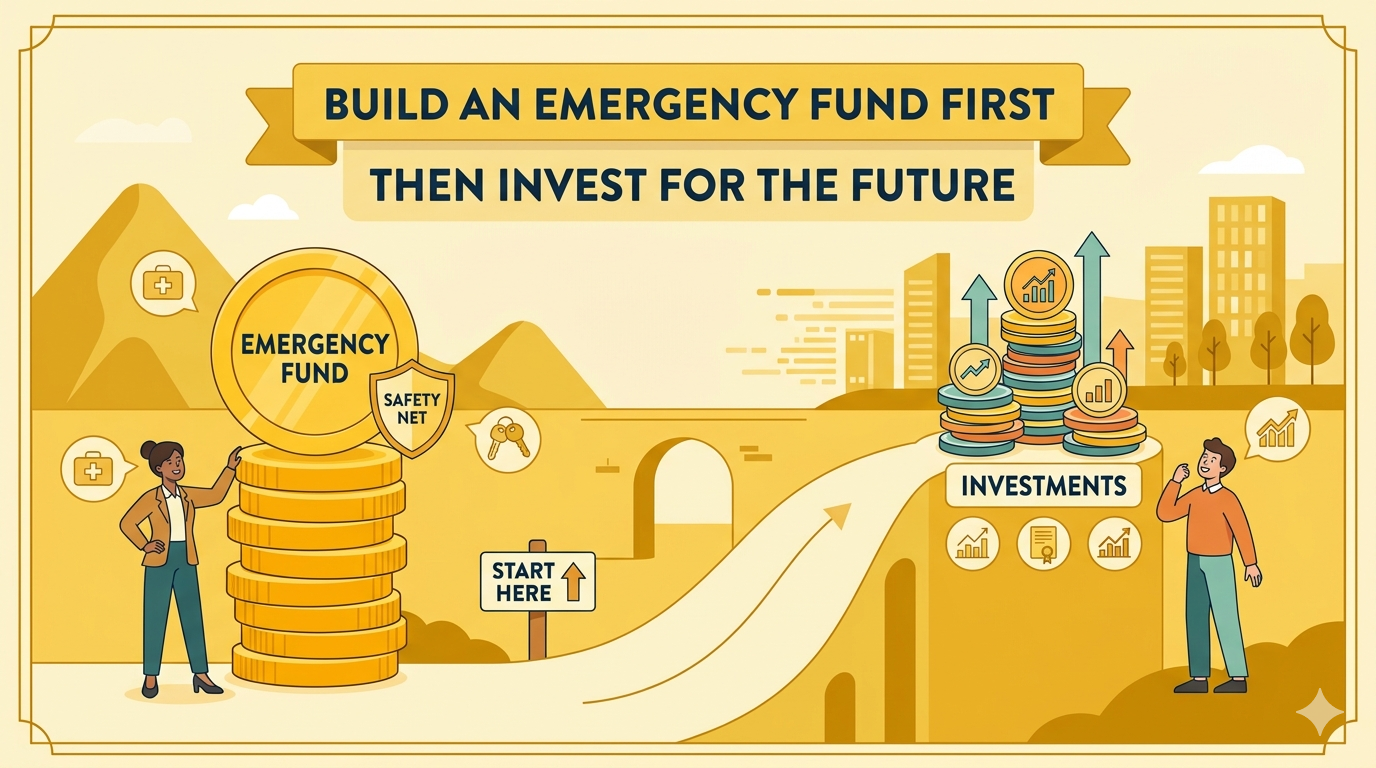
In this environment, a cash cushion isn't optional. It's the difference between weathering a rough patch and spiraling into debt. Build the fund first, in a high-yield account that pays you to wait. Then invest everything above that line as aggressively as you want.
This article is for educational purposes only and does not constitute financial advice. Always do your own research before making any investment decisions.
Ready to start building wealth once your emergency fund is set? Our article on index funds for beginners explains the simplest way to invest for the long term.