The S&P 500 ETF Dominates Because It Makes Winning Effortless
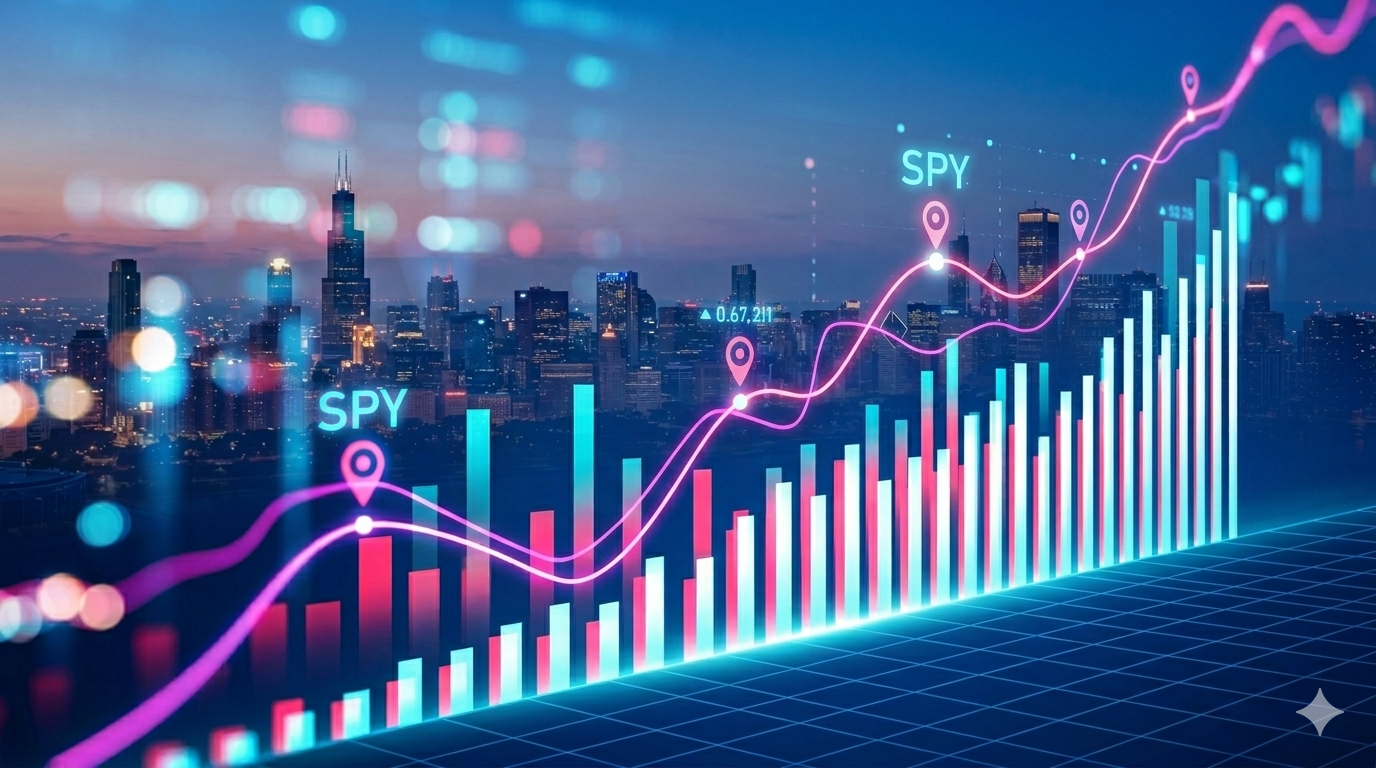
The S&P 500 just closed at 7,500 after nine winning weeks out of the last ten — record highs that came despite tariff headlines, interest rate fears, and a single-day chip stock collapse that wiped 2.6% off the index in hours. Through it all, the simplest investment vehicle kept compounding quietly: the S&P 500 ETF.
Only 14% of actively managed U.S. large-cap funds have beaten the S&P 500 over the past 10 years.
500 companies, 75% coverage
The S&P 500 is not just a number that scrolls across financial news tickers. It is a collection of the 500 largest publicly traded companies in the United States, weighted by market capitalisation, and it represents roughly 75% of all tradable U.S. stocks by value. When the index closed at 7,500 on June 18, that figure reflected the collective market value of companies spanning technology, healthcare, financials, consumer goods, and energy — essentially the entire American economy in one basket.
Buying the S&P 500 through an ETF means you own a fractional slice of all 500 companies at once, from Apple and Microsoft down to the 500th-largest name, without needing to know what any of them do.
14% beat it in a decade
Only 14% of actively managed U.S. large-cap funds have beaten the S&P 500 over the past 10 years. That statistic is not a fluke — it is the mathematical result of fees, timing errors, and the difficulty of consistently picking winners in a market where information moves instantly.
When you buy an S&P 500 ETF like VOO or IVV, you pay an expense ratio as low as 0.03% annually — three dollars per year for every ten thousand invested. Active fund managers charge significantly more and still lose to the index in 86 out of 100 cases over a decade.
During volatile stretches like the one in early June 2026, when chip stocks collapsed and the S&P dropped 2.6% in a single session, active managers are supposed to protect you by rotating out of danger. The data shows they do not. The past year included tariff shocks, geopolitical flare-ups, and Fed policy uncertainty, yet only 33% of active funds beat their index benchmarks during that period.
The S&P 500 ETF does not try to be clever — it just holds the market, rebalances quarterly, and collects the long-term return of American business growth.
Emotion exits when autopilot enters
Dollar-cost averaging is the practice of investing a fixed amount at regular intervals — 200 dollars on the first of every month, for instance — regardless of whether headlines scream crisis or euphoria. When you automate contributions into an S&P 500 ETF, you buy more shares when prices fall and fewer when they rise, smoothing out the emotional peaks and valleys that destroy returns for most investors.
The week the S&P dropped 2.6% on stronger-than-expected jobs data and rising bond yields, dollar-cost averaging buyers simply purchased shares at 7,383 instead of 7,609 — a discount they did not have to time or predict. When the index bounced back within days and set a new record, those same shares appreciated without requiring a single decision.
The method works because it removes the need to predict Fed policy shifts, geopolitical outcomes, or whether this week will be the eleventh winning week or the first losing one. You are not trading the news — you are steadily accumulating ownership of the 500 largest profit-generating machines in the U.S. economy, and compounding does the rest.
This article is for educational purposes only and does not constitute financial advice. Always do your own research before making any investment decisions.