How IPOs Actually Work Behind the Scenes
When a company goes public at $20 per share, retail investors often find it trading at $35 by the time their brokerage app lets them buy. That gap isn't a glitch. It's the gap between two parallel markets — one that happens before the opening bell, and one that happens after.
Roughly 90% of IPO shares are typically allocated to institutional investors, while only about 10% go to individual investors.
Why you're always late to the party
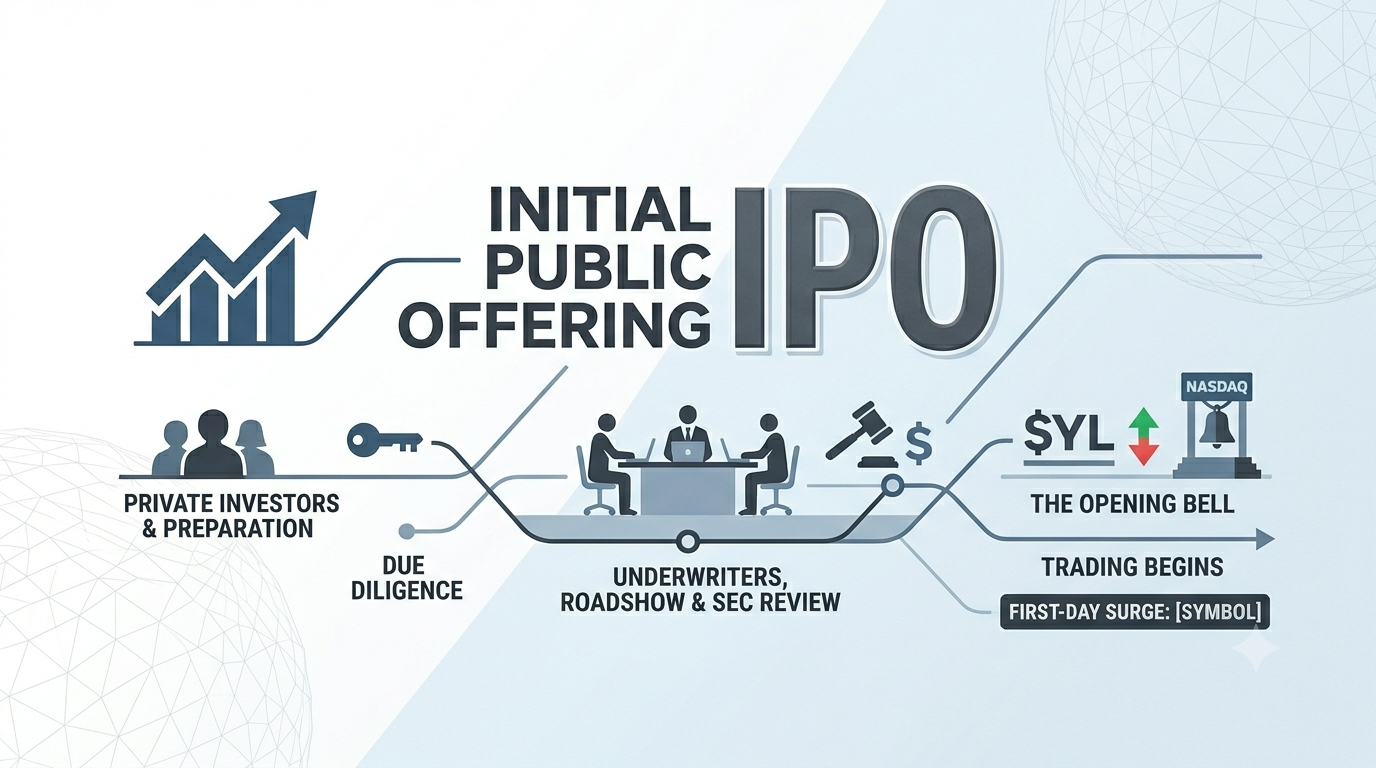
An IPO isn't a single moment when a stock starts trading. It's a multi-month process designed to transfer ownership from early backers to the public. The company hires investment banks to lead the underwriting effort and gather interest from institutional investors like fund managers and pension funds . These institutional players get first access to shares at the offering price. Retail investors join only after the stock begins trading on exchanges.
The typical institutional-to-retail split is 90/10 . That means nine out of every ten IPO shares go to mutual funds, hedge funds, and other institutions before regular investors can even place an order. By the time your broker lets you click "buy," those institutions may have already flipped their shares for a profit.
How banks decide who gets what
Investment banks promote the company through an IPO roadshow — a series of presentations to institutional investors designed to stir up interest before determining the share price . During this roadshow, management meets back-to-back with mutual funds, hedge funds, pension funds, and sovereign wealth funds .
The underwriter collects indications of interest from institutional investors during what's called "book building" — investors specify how many shares they want and at what price . This "book" of demand helps the underwriter gauge the right offering price and allocate shares strategically . Retail investors don't participate in this process. They wait on the sidelines until the price is set and shares start trading.
The first-day pop and who profits from it
IPO shares are often intentionally priced below what the market will bear. From 2001 through 2023, the average first-day pop has settled at approximately 17.5% . This underpricing is not an anomaly but a persistent and embedded feature of the IPO market .
Why underprice on purpose? Investment banks have been accused of intentionally underpricing IPOs to build trust among institutional investors — who are also their clients . A stock that jumps 20% on day one makes institutional buyers happy. They got in at $20, sold at $24, and will come back for the next deal. The company leaving money on the table? That's the cost of a "successful" IPO in the eyes of underwriters.
What this means for you
If you're a retail investor trying to buy IPO shares, your odds depend heavily on demand. When a well-known company goes public and demand exceeds supply, it can be difficult for retail investors to get an allocation — a situation called being oversubscribed . Even if you request 100 shares through your broker, you might receive only 20, or none at all.
And if you do get shares at the IPO price, you're one of the lucky few. Most retail investors can only buy once the stock starts trading — often at a price significantly higher than what institutions paid hours earlier. By then, the easiest money has already been made.
This article is for educational purposes only and does not constitute financial advice. Always do your own research before making any investment decisions.