How a 401(k) Works — and Why the Employer Match Is Free Money
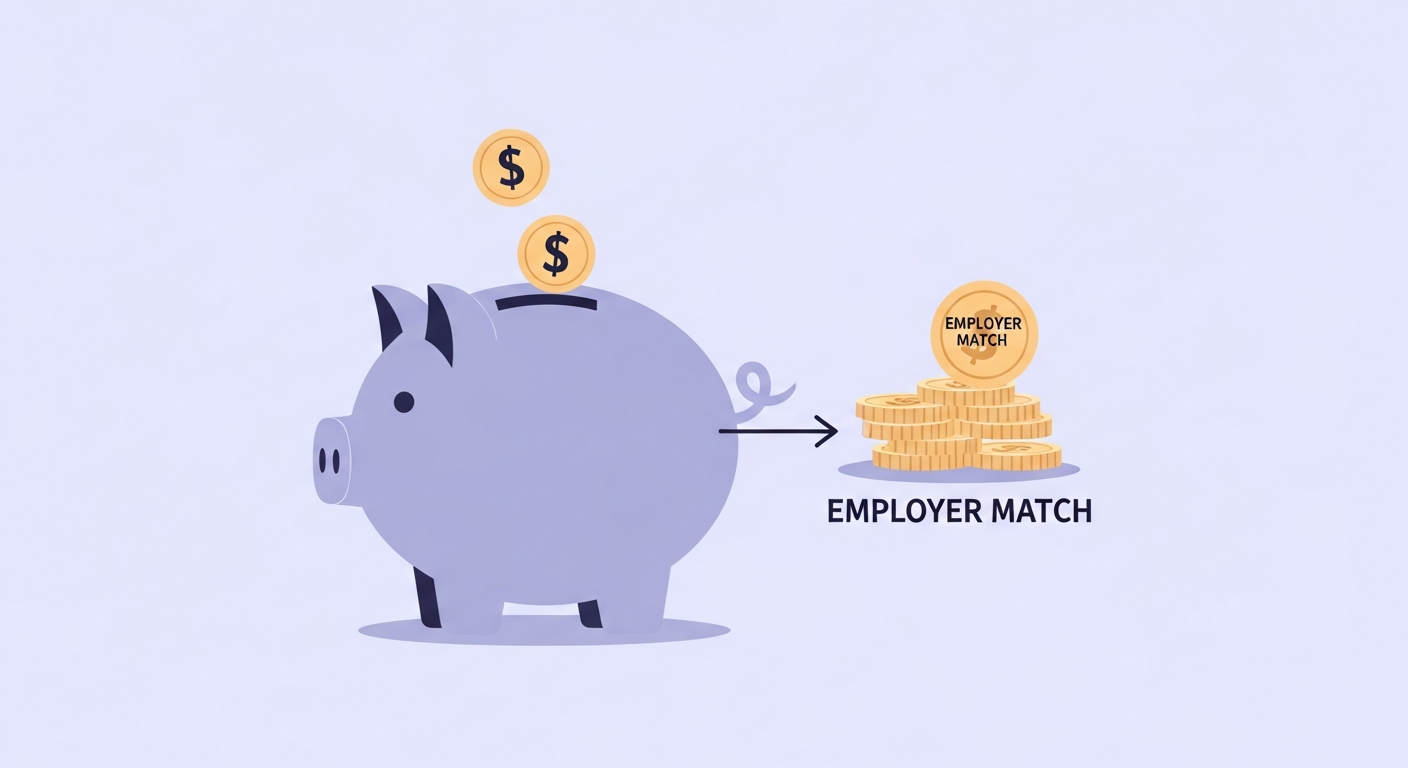
In 2026, someone earning $80,000 who contributes just enough to capture a 5% employer match receives $4,000 from their company without lifting a finger. Miss that match, and you've left $4,000 on the table — money that could have grown to over $30,000 by retirement.
Missing that match is the financial equivalent of turning down a raise — it costs you nothing extra to receive, and it compounds tax-deferred for decades.
This year, contribution limits jumped, new super catch-up rules arrived for workers in their early 60s, and the rules around high-earner catch-ups changed entirely. Here's what you need to know.
The 2026 limits just increased
The 2026 contribution limit for a 401(k) is $24,500, up from $23,500 in 2025. That's the maximum you can contribute from your own paycheck before taxes each year.
Workers aged 60 to 63 can now contribute an additional $11,250 in super catch-up contributions on top of the standard limit, allowing some to save as much as $35,750 in a single year. The super catch-up is a brand-new provision designed to help people in the final stretch before retirement accelerate their savings when earnings often peak and expenses like mortgages or college tuition may have dropped off.
Capture every dollar of match
If your company offers a match — say, 50 cents for every dollar you contribute up to 6% of your salary — that match is the highest guaranteed return you will ever see. If you contribute at least enough to get the full amount, every dollar your company saves for you is one you don't have to save yourself.
A common match structure is 100% of the first 3% you contribute, plus 50% of the next 2%, which means contributing 5% of your salary unlocks the full company benefit.
High earners face new Roth rule
Starting in 2026, workers earning over $150,000 must make catch-up contributions as Roth contributions, meaning after-tax dollars instead of pre-tax. This applies to anyone using the standard $7,500 catch-up for ages 50 and up, or the new $11,250 super catch-up for ages 60 to 63.
For many pre-retirees, this changes tax planning significantly — catch-up contributions no longer reduce taxable income in the year they're made, but they do grow tax-free and come out tax-free in retirement. If you're a high earner approaching retirement, this rule means you'll want to revisit your contribution strategy and possibly rebalance between traditional pre-tax contributions and the new mandatory Roth catch-ups.
This article is for educational purposes only and does not constitute financial advice. Always do your own research before making any investment decisions.
Wondering whether to choose traditional or Roth contributions? Our article on Roth vs. Traditional 401(k) contributions breaks down the tax trade-offs step by step.