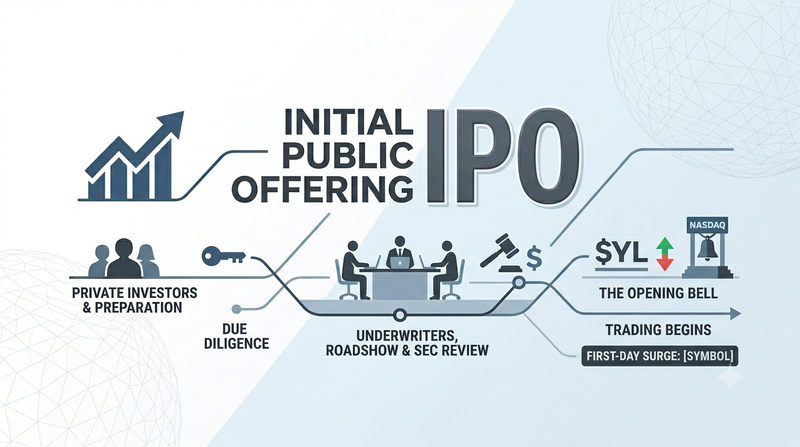
SpaceX IPO on June 12 at $135 a Share — What Beginner Investors Actually Need to Know
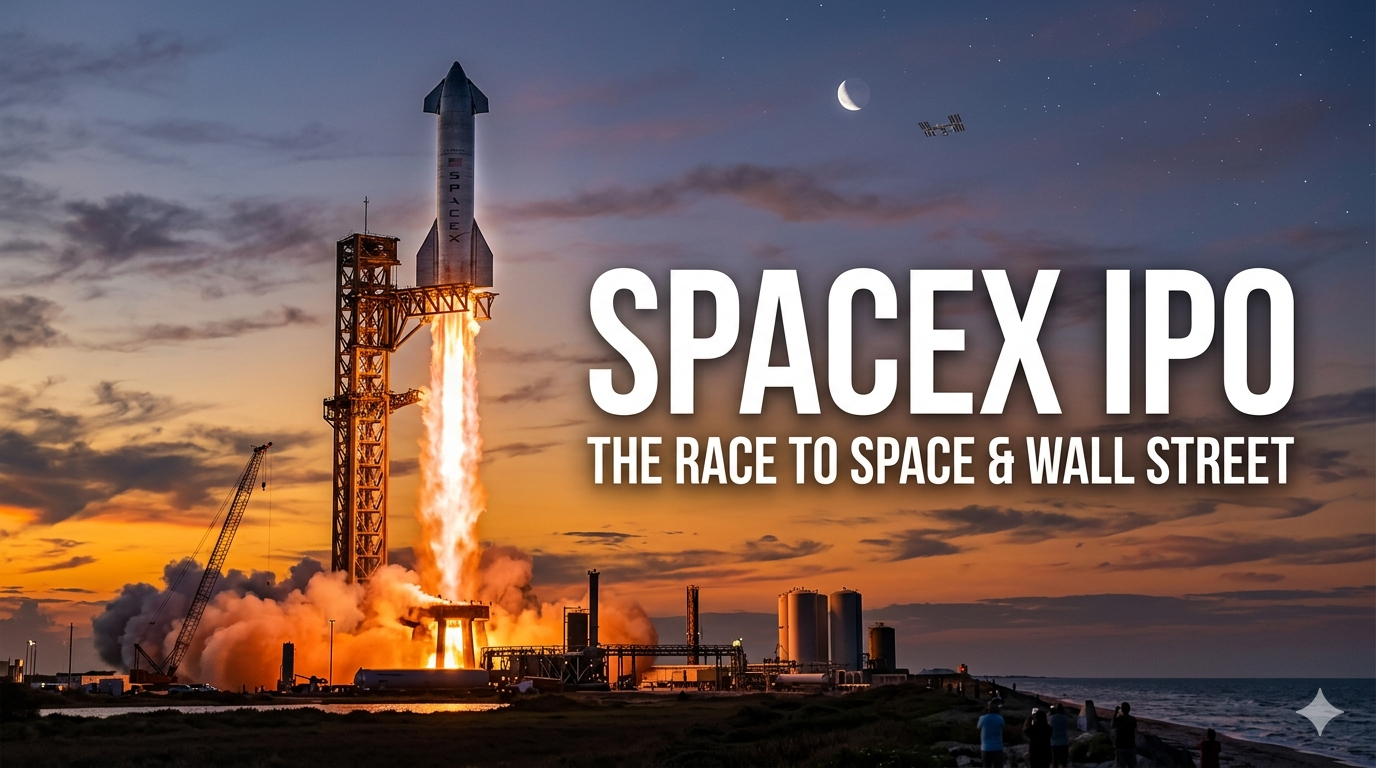
A $1.77 trillion valuation. A $75 billion raise. A company that lost $4.9 billion last year. SpaceX's June 12 IPO is set to become the largest stock market debut in history — and the gap between the hype and the fine print is forcing beginner investors to ask a question Wall Street would rather they didn't: is this the opportunity of a lifetime, or a very expensive lesson in patience?
At the IPO price, SpaceX trades at roughly 95 times trailing revenue — an extreme multiple even for a high-growth tech stock.
The largest IPO ever
SpaceX will sell 555.6 million shares at $135 each on June 12, raising $75 billion and valuing the company at $1.77 trillion — more than triple the previous IPO record set by Alibaba in 2014. That valuation would make SpaceX the seventh-largest company in the United States, bigger than Tesla, and instantly one of the most valuable stocks a beginner could buy.
But analysts are split down the middle. Some point to Starlink — the satellite internet business that generated $11.4 billion in revenue and $4.4 billion in operating profit in 2025 — as proof the company has a genuine cash engine. Others, including Morningstar analyst Nicolas Owens, peg SpaceX's fair value at roughly $780 billion, less than half the IPO price, and recommend investors wait for a lower entry point.
The difference comes down to what you believe happens next. SpaceX is pricing in a future where Starlink dominates global internet, Starship launches at industrial scale, and AI infrastructure in orbit becomes a trillion-dollar business. None of those outcomes are guaranteed — and all of them are already baked into the $135 price tag.
What beginners miss about megacap IPOs
One of the biggest misconceptions about buying an IPO is that you are getting in early. You are not. Elon Musk will retain over 82% of voting control after the offering, meaning public shareholders own shares but have zero say in how the company is run. SpaceX is also what Nasdaq calls a controlled company, exempt from certain governance rules that protect investors in normal public companies.
Then there is the profitability question. SpaceX generated $18.7 billion in revenue in 2025, but it lost $4.9 billion that same year. The first quarter of 2026 alone saw a $4.27 billion net loss, driven largely by massive spending on AI infrastructure. At the IPO price, SpaceX trades at roughly 95 times trailing revenue — an extreme multiple even for a high-growth tech stock.
Finally, buying into a newly public megacap is mechanically different from buying an established stock. Liquidity can be thin in the first days of trading, price swings can be violent, and insider lockup periods — which prevent early investors from selling immediately — create waves of supply that hit the market months later. SpaceX's lockup is staggered, with insiders able to sell up to 20% of their shares after the first quarterly earnings report, expected in late July or early August.
Should you buy, wait, or ignore it
If you are 18 to 35 and investing for the long term, the most practical answer might be the least exciting one: do nothing, and let the index funds do the work for you. Nasdaq rewrote its rules in May 2026 to allow mega-IPOs like SpaceX to enter the Nasdaq-100 index after just 15 trading days. If SpaceX qualifies — and most analysts expect it will by late June or early July — index funds tracking the Nasdaq-100 will be forced to buy billions of dollars worth of shares automatically.
That means if you already own a total market index fund or a tech-heavy fund like QQQ, you will own SpaceX anyway, at whatever weight the index assigns it, without paying the premium that comes with chasing a hot IPO on day one. For beginners who want direct exposure, dollar-cost averaging over several months makes more sense than buying on June 12. History shows that high-profile IPOs often trade below their debut price within the first year, giving patient investors better entry points.
The key is separating the story from the price. SpaceX is a genuine innovator with a real competitive advantage in launch costs and satellite internet. But innovation does not always mean the stock is cheap today — and at $135 a share, the market is pricing in a decade of near-perfect execution.
This article is for educational purposes only and does not constitute financial advice. Always do your own research before making any investment decisions.
Curious how index funds absorb new stocks like SpaceX automatically? Our article on how index investing works breaks down the mechanics step by step.